Event Badges: Examples, Custom Passes, and Security Tips

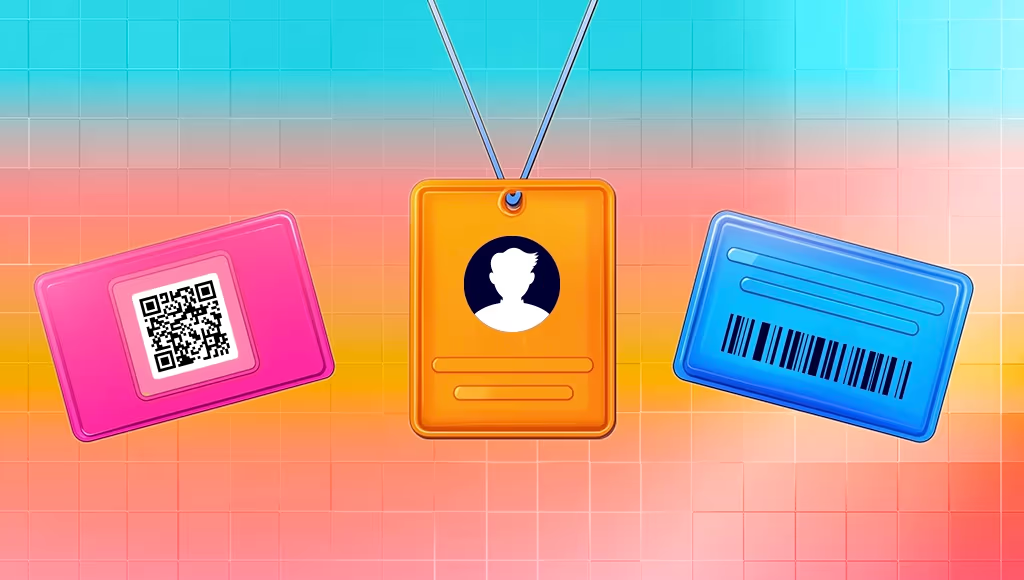
Event badges are essential for identification, security, and branding at any event. The right badge design can make check-in smoother, improve the attendee experience, and help your event feel more organized from the moment people arrive.
They may seem like a small detail, but badges do a lot of work during a live event. They help staff verify access, give attendees confidence about where they belong, and create useful conversation starters throughout the day.
Key Takeaways
- Explore different types of custom badges that enhance security, branding, and attendee experience across various event sizes.
- High-quality printing and durable materials ensure longevity and a professional appearance.
- Personalization options and technology integrations, such as QR codes and RFID, streamline event operations.
What are Event Badges?

Event badges are more than just identification tools. They play a critical role in event management, security, and networking. Whether for conferences, trade shows, or concerts, they help control access, enhance branding, and improve attendee interactions.
Custom event badges can be designed to fit specific event needs. Full-color printing, high-gloss finishes, and durable materials help badges remain intact throughout the event, while technology like QR codes and RFID improves check-in efficiency and security.
Enhancing Badge Usability
Accessories such as badge holders, lanyards, and retractable reels keep badges secure, comfortable to wear, and easily accessible when attendees need to show or scan them.
Top Event Badge Examples

Not every event badge needs to look or function the same way. The right format depends on how much information you need to show, how visible the badge should be from a distance, and whether it also needs to support scanning, sponsorship, or access control.
That is why it helps to think about badge design in terms of use case rather than just appearance. A simple attendee pass and a premium all-access credential solve different problems, even if both are technically badges.
1. Standard Badges
Standard badges are ideal when clarity and efficiency matter most. They keep the layout simple, which helps staff and attendees quickly identify names and organizations without visual clutter.
Simple, displaying attendee name and organization.
Essential for identification and access control.
2. Full-Color Badges
Full-color badges are a good fit when branding matters just as much as functionality. They can carry sponsor exposure, event themes, and stronger visual consistency across the attendee experience.
Incorporate sponsor logos and event branding.
Enhance aesthetics and reinforce brand visibility.
3. 4” x 6” Premium Badges
Larger badges make sense when you need room for more data, clearer typography, or premium design details. They are especially useful for multi-day conferences, VIP passes, and events with layered access permissions.
Larger size allows for additional information such as QR codes and agendas.
Highly visible and easy to read.
How Custom Event Badges Elevate Your Event Experience

Custom event badges do more than identify people. They shape how polished, secure, and easy to navigate the event feels from the attendee’s point of view. When the badge is designed well, it quietly supports the entire experience.
That includes both practical and brand-related benefits. The same badge can help staff manage access, help attendees recognize each other, and reinforce the look and feel of the event all at once.
1. Improved Security
Custom event badges help manage access control, ensuring only authorized attendees enter restricted areas.
2. Increased Brand Visibility
Branded badges turn attendees into brand ambassadors, promoting event sponsors and themes.
3. Enhanced Attendee Engagement
Personalized badges displaying names, roles, and affiliations encourage networking and interactions.
Customization & Technology in Event Badges

Badge technology has moved well beyond printed names on cardstock. Today, organizers often expect badges to support fast entry, flexible permissions, sponsor branding, and real-time attendee management.
That is why the strongest badge systems combine thoughtful design with smart functionality. A badge should look clean, but it should also make operations easier behind the scenes.
1. QR Codes & RFID for Seamless Check-in
QR codes streamline entry and attendee tracking. RFID integration enhances security and access control.
2. Variable Data Printing
Allows customization of names, roles, and session details.
Supports personalized access levels.
3. Durable Printing & Material Options
High-resolution 300 DPI printing ensures clarity.
Tearproof and waterproof materials increase longevity.
8 Principles for High-Quality Event Badge Printing

High-quality badges are not just about aesthetics. Print quality affects readability, scan success, durability, and the overall professionalism of the event. Small production mistakes can quickly become operational problems at check-in desks and venue entrances.
That is why it helps to treat badge production as part of the attendee journey, not as a last-minute print task. These core principles usually make the biggest difference.
- Use durable materials – Avoid thermal paper, which fades quickly.
- Opt for high-resolution printing – Ensures clarity and professionalism.
- Incorporate security features – Add holograms, barcodes, or embedded NFC.
- Ensure fast printing speeds – Prevent check-in delays for large events.
- Enable real-time updates – Personalize badges on-site as needed.
- Choose eco-friendly options – Sustainable materials reduce environmental impact.
- Test before mass production – Always request a proof before printing.
- Use online ordering tools – Design badges conveniently with customizable templates.
Enhancing Event Security with Badges

Event badges improve security by controlling access and identifying attendees. Different badge types such as VIP passes, backstage passes, and event staff IDs help manage permissions effectively.
They become even more useful when combined with digital tools. Instead of relying on visual checks alone, teams can validate permissions quickly and consistently across entrances, sessions, and restricted spaces.
Pairing Badges with Other Security Tools
Wristbands – Differentiate attendee categories.
Retractable Badge Reels – Allow quick access to scanning and swiping.
Mobile Badge Scanning – Integrate with digital check-in solutions.
How Fliplet Supports Badge Management
Fliplet provides comprehensive digital solutions for event badging, simplifying both design and printing processes while enhancing attendee management.
That matters because badge workflows often span several teams, from registration and design through to onsite operations. The easier it is to manage data, layouts, printing, and scanning in one place, the less room there is for event-day friction.
Badge Printing – Print high-quality event badges on demand.
Template Builder for Badge Layout – Create customized badge designs with ease.
Printer Integration – Connect with various badge printers for seamless production.
Avery Name Tag Template Integration – Use standard templates for quick and easy badge creation.
Material Purchasing – Order durable and professional materials for event badges.
QR Codes – Generate unique QR codes for each attendee to streamline check-ins and security.
Data Export for External Printing – Export attendee data for third-party printing services if needed.
By integrating Fliplet, event organizers can optimize badge printing efficiency, improve security, and deliver a seamless experience for attendees.
Conclusion
Custom event badges are essential for security, branding, and networking. By incorporating high-quality materials, innovative designs, and technology like QR codes and RFID, you can create a seamless and memorable event experience with check-in and badging tools.
Lisa Broom is the Content Writer and Head of Marketing at Fliplet - an app building platform that enables anyone to easily create engaging and interactive mobile and web apps.
Frequently Asked Questions
What are the benefits of customizing event badges?
Custom event badges improve networking, security, and branding, while also helping attendees move through the event with less friction.
How can I ensure quality and accuracy in my custom event badges?
Always request a proof before printing, confirm attendee data carefully, and test the layout at full size so names, logos, and QR codes remain readable.
How do custom event badges enhance event security?
They control access, identify attendees, and integrate with scanning tools or access rules to help staff verify who should be where.
What personalization options are available for event badges?
Event badges can include attendee names, companies, pronouns, session tracks, sponsor logos, QR codes, and access levels.
What types of badge holders and accessories are available?
Vinyl, rigid, and oversized badge holders, plus lanyards, wristbands, and retractable reels, all help make badges more practical to wear and scan.
What information should appear on an event badge?
At minimum, include the attendee’s name. Depending on the event, it can also help to add company, role, access level, QR code, or track information.
Are printed event badges compatible with digital check-in tools?
Yes. Printed badges often work alongside QR code scanners, RFID readers, and mobile check-in tools, which makes them useful for both access control and reporting.