How to Create an Event Marketing Plan in 2026 + Free Template

Planning a successful event requires a strategic approach, and our comprehensive guide on crafting an effective event marketing plan is designed to help you achieve just that. Using an event app can make the process even smoother, helping you manage registrations, engage attendees, and track results in real time.
We'll help you set clear objectives and select the right tools. We'll even give you the essential steps to success and a practical template to streamline your event planning process. Our insights will ensure you engage your audience and deliver a memorable experience with principles that apply at corporate events, community initiatives, and even personal gatherings.
Dive in to discover how to elevate your event with our expert tips and tailor-made template.
Key Takeaways
- An event marketing plan is your blueprint for promoting an event, breaking down steps from setting goals to post-event wrap-up.
- The 5Ps framework (Product, Price, Place, Promotion, People) forms the bedrock of a comprehensive event marketing strategy.
- Setting SMART goals and understanding your audience are crucial first steps in creating an effective event marketing plan.
- Event apps and digital tools can significantly enhance your marketing efforts and attendee engagement throughout the event journey.
What is an event marketing plan?
An event marketing plan is essentially your blueprint for promoting an event. It's a guide that breaks down the steps of advertising your event — from setting goals to wrapping things up post-event.
It often incorporates various components, such as budget planning, marketing timelines, and specific marketing tactics, such as social media campaigns, email outreach, and partnership opportunities.
Using an event marketing plan template simplifies the entire process, ensuring everything from budgeting to promotional activities is on point. The aim? To boost attendance, engage your audience fully, and make sure your event is one to remember!
The 5Ps of Event Marketing
As you embark on the journey of crafting a remarkable event, consider the powerful framework of the 5Ps – Product, Price, Place, Promotion, and People. These strategic pillars form the bedrock of your event marketing campaign, ensuring a comprehensive approach that resonates with your audience and amplifies your brand.
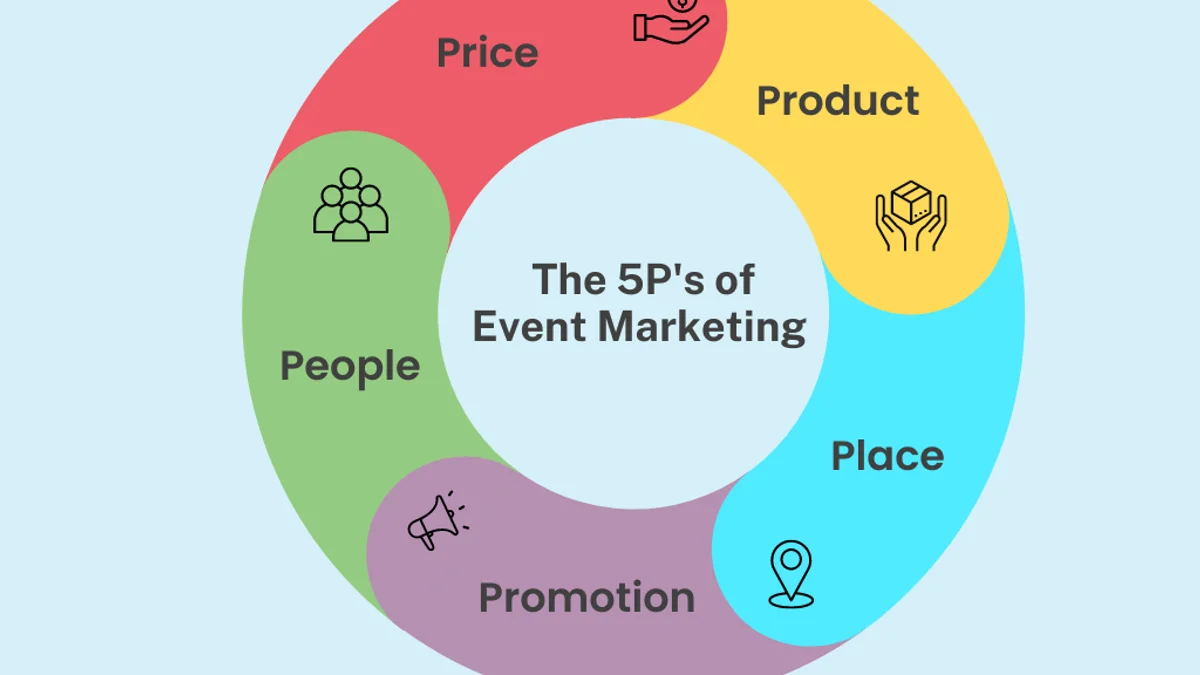
Product
Your event is not just an occasion; it's a unique proposition that demands attention. What sets your event apart? What distinct qualities make it stand out amidst a sea of offerings? Defining your event's essence lays the groundwork for a captivating marketing strategy.
Beyond mere attendance, your event holds inherent value. What can attendees and sponsors gain from participating? Identifying the value proposition allows you to communicate the worth of your event effectively.
Place
The realm of events has expanded beyond physical boundaries. Will your event be an in-person experience, or virtual, or a hybrid of both? The place sets the stage for engagement, and aligning it with your audience's preferences ensures resonance.
Promotion
Every event has a story to tell, a message to convey. What message will your event communicate to your target audience? How will your event narrative reflect your brand's essence? Promoting the right message in the right way creates anticipation and interest.
People
Events are bridges connecting your brand with your audience. The people attending your event want the chance to network with others. You need to consider, who is your audience? Who do you seek to engage and enthrall? Understanding your audience's demographics, interests, and aspirations directs your event marketing efforts toward impactful engagement.
The 5Ps aren't just guidelines; they are the roadmap to success. By addressing each element, you lay a solid foundation for your event marketing plan, enabling strategic decisions that resonate with your audience and drive impactful engagement.
The importance of event marketing planning
Event marketing has changed the game of events. The change reflects on the rising attendee expectations and the need for organizations to leave a lasting impression.
Events are now a place where attendees and speakers go to, to not only learn and be educated but also to interact, engage and network. And for event marketers and planners, it's a perfect place to grow their brand and make a statement.
Effective event marketing yields a variety of benefits, including increased attendance, revenue, and brand awareness, as well as increased brand loyalty, community participation, and meaningful relationships. This strategy transforms events from one-time happenings to continuing touchpoints that stay with guests long after the 'curtains drop'.
6 Steps for Creating a Successful Event Marketing Plan
1. Setting clear event goals and budget
Every successful journey starts with a clear destination and the means to reach it. In event marketing, this foundation is built upon setting Specific, Measurable, Achievable/Attainable, Relevant, and Timely (SMART) goals and establishing a budget that aligns with your aspirations.
SMART goals are your compass, guiding your event marketing strategy from conception to execution. These goals are:
- Specific: Clearly defined and focused
- Measurable: Quantifiable outcomes
- Achievable/Attainable: Realistic given your resources
- Relevant: Aligned with your overall objectives
- Timely: Bound by a clear timeframe
Imagine your goal is to "grow our prospective leads list for our new product by 100 names by the end of the event." This SMART goal is specific (focused on the new product's leads), measurable (100 names), achievable and relevant (given the event's context), and timely (by the event's conclusion).
While tangible goals are essential, don't overlook intangible objectives like "strengthen relationships" and "engage prospective customers." For creative decisions, SMART goals serve as a guide in both strategy and post-event assessment.
2. Mapping Your Event Marketing Budget
Crafting a clear budget empowers you to make informed decisions – from venue selection to entertainment choices and event app development.
Your budget is a decision-making tool that influences every aspect of your event. It's not just numbers; it's the backbone of your event's financial planning. By aligning your budget with your SMART goals, you ensure a strategic allocation of resources that maximizes impact.
As you venture forth in your event marketing journey, remember that SMART goals and a well-defined budget aren't constraints; they're stepping stones toward a successful and memorable event. They provide the framework for strategic decision-making and empower you to create an event that leaves a lasting impression.
3. Understanding your audience
Knowing your audience isn't just a choice; it's a necessity. Your event's success hinges on your ability to identify and resonate with the key demographics and psychographics of your target attendees.
Your audience's characteristics – age, gender, location, occupation – form the foundation of your event's appeal. Understanding these factors helps tailor your marketing efforts and event offerings to match their preferences.
Delve deeper into your audience's psyche – their interests, values, lifestyle, and motivations. This understanding forms the emotional connection that elevates your event from being just another option to an irresistible experience.
Understanding your audience isn't a one-size-fits-all endeavor. Tailoring your marketing efforts to resonate with various demographics and psychographics enhances engagement and creates a sense of belonging.
Effective event marketing embraces diversity, acknowledging that every attendee is unique. Real-life event campaign photos illustrate the beauty of diverse audiences engaging passionately. From millennials seeking innovation to professionals searching for networking opportunities, each demographic finds value tailored to their aspirations.
4. Deep dive into attendee journey

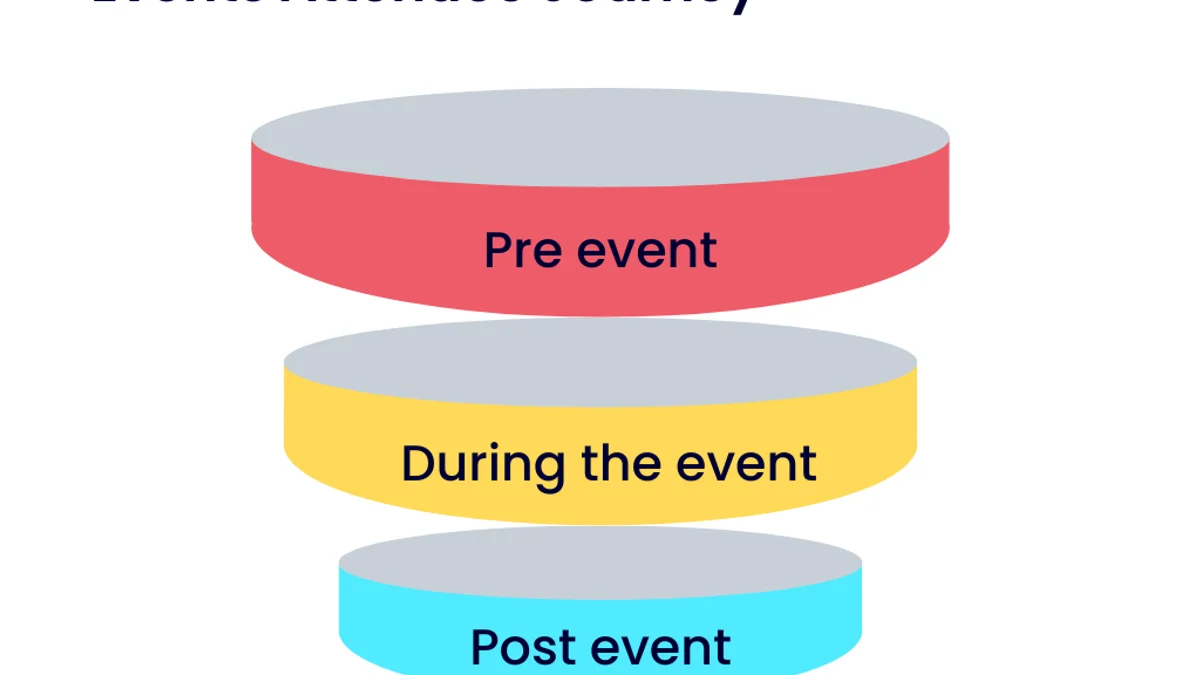
Navigating the path of the event attendee journey is pivotal in orchestrating a seamless event marketing strategy. As events take various forms, they still tend to follow a common structure. Here, we delve into the critical stages and touchpoints that punctuate this journey, along with key considerations to ponder as you plan each phase.
Aligning each stage with the event timeline ensures a seamless transition from anticipation to active engagement to post-event loyalty. This synchronization improves the experience for attendees and underlines the consideration given to each element of your event marketing strategy.
5. Crafting your event marketing strategy
Creating a successful event requires a strategic journey that resonates with attendees every step of the way. To elevate this journey, consider embracing a versatile tool that seamlessly aligns with each stage such as an event app. Fliplet's Event Solution is a dynamic marketing tool that enhances engagement and enriches the attendee experience.
Building anticipation usually happens months before your event, the sooner you do it the more attendees you are likely to have. We would recommend having ideas in place before your event is live on your website so that once your event registration is live you can start sparking interest straight away. Some ways to build anticipation from the off-set are:
- Social media teasers and countdowns
- Early bird registration offers
- Speaker and agenda announcements
- Behind-the-scenes content
- Email marketing campaigns
6. Measuring success and optimizing
After your event, it's crucial to measure the success of your marketing efforts. Track key metrics such as registration numbers, attendance rates, engagement levels, and ROI. Use this data to refine your strategy for future events and continuously improve your event marketing approach.
Summary
Creating an effective event marketing plan is essential for event success. By following the 5Ps framework, setting SMART goals, understanding your audience, and leveraging the right tools like event apps, you can create a comprehensive marketing strategy that drives attendance and engagement.
Ready to elevate your event marketing? Fliplet offers powerful event solutions that can help you plan, execute, and measure your event marketing efforts effectively. Explore our range of tools designed to enhance your event marketing strategy and ensure the success of your events.
Lisa Broom is the Content Writer and Head of Marketing at Fliplet - an app building platform that enables anyone to easily create engaging and interactive mobile and web apps.
Frequently Asked Questions
What is an event marketing plan?
An event marketing plan is a blueprint for promoting an event that breaks down the steps of advertising from setting goals to post-event wrap-up. It includes budget planning, marketing timelines, and specific tactics like social media campaigns and email outreach.
What are the 5Ps of event marketing?
The 5Ps framework consists of Product (your event's unique value), Price (pricing strategy), Place (venue format - in-person, virtual, or hybrid), Promotion (marketing message and channels), and People (your target audience).
How do I set SMART goals for my event?
SMART goals are Specific, Measurable, Achievable/Attainable, Relevant, and Timely. For example, "grow our prospective leads list by 100 names by the end of the event" is a SMART goal that provides clear direction and measurable outcomes.
Why is understanding my audience important?
Understanding your audience's demographics and psychographics helps you tailor your marketing efforts and event offerings to match their preferences, creating an emotional connection that makes your event irresistible to your target attendees.
What tools can help with event marketing?
Event apps like <a href="/mobile-event-app/">Fliplet's event solution</a> can significantly enhance your marketing efforts by helping you manage registrations, engage attendees, track results in real-time, and provide a seamless experience throughout the event journey.