Maximize Event Success: The Ultimate Guide to Advanced Attendee Tracking

Tracking attendance at events is crucial for optimizing the success of any event. That's true whether you're hosting a corporate conference, a large festival, or a small workshop. No matter what, knowing who attends and how they engage with your event can provide insights that will drive serious growth.
In the following guide, we explain the importance of attendance tracking, the best technological solutions to do the job, and the kinds of options you have to track attendance. We'll also go over typical challenges you might run into. No matter what events solution you're looking for, we cover it below.
Key Takeaways
- Importance: Attendance tracking improves planning, resource allocation, attendee experience, data collection, security, and post-event feedback.
- Technologies: QR codes, mobile apps, biometrics, manual/digital check-ins, hybrid methods, RFID, facial recognition.
- Challenges: Privacy, accuracy, costs, technical issues, integration, user adoption, compliance—and how an event attendee tracking app can help overcome them.
Importance of Attendance Tracking

Tracking attendance is a critical component of event management. It provides benefits that enhance planning, execution, and post-event analysis:
- Improved planning and organization — accurate forecasting, better logistics, smooth check-in
- Resource allocation — efficient staff and material distribution
- Improved attendee experience — streamlined check-in, personalized experiences, enhanced engagement
- Data collection and analysis — demographic and behavioral data, attendance patterns, data-driven decisions
- Security and safety — attendee movement monitoring, crowd control, compliance
- Post-event feedback and follow-up — targeted surveys, post-event communication
- Compliance and reporting — legal requirements, audit records
- Revenue management — ticket sales tracking, ROI measurement
- Sponsor and exhibitor benefits — detailed attendance reports
- Marketing insights — target audience identification, campaign effectiveness
By prioritizing attendee tracking, you ensure better planning, improved experiences, and valuable insights. That's what makes it a key element of any event marketing plan.
Technologies Used in Attendance Tracking
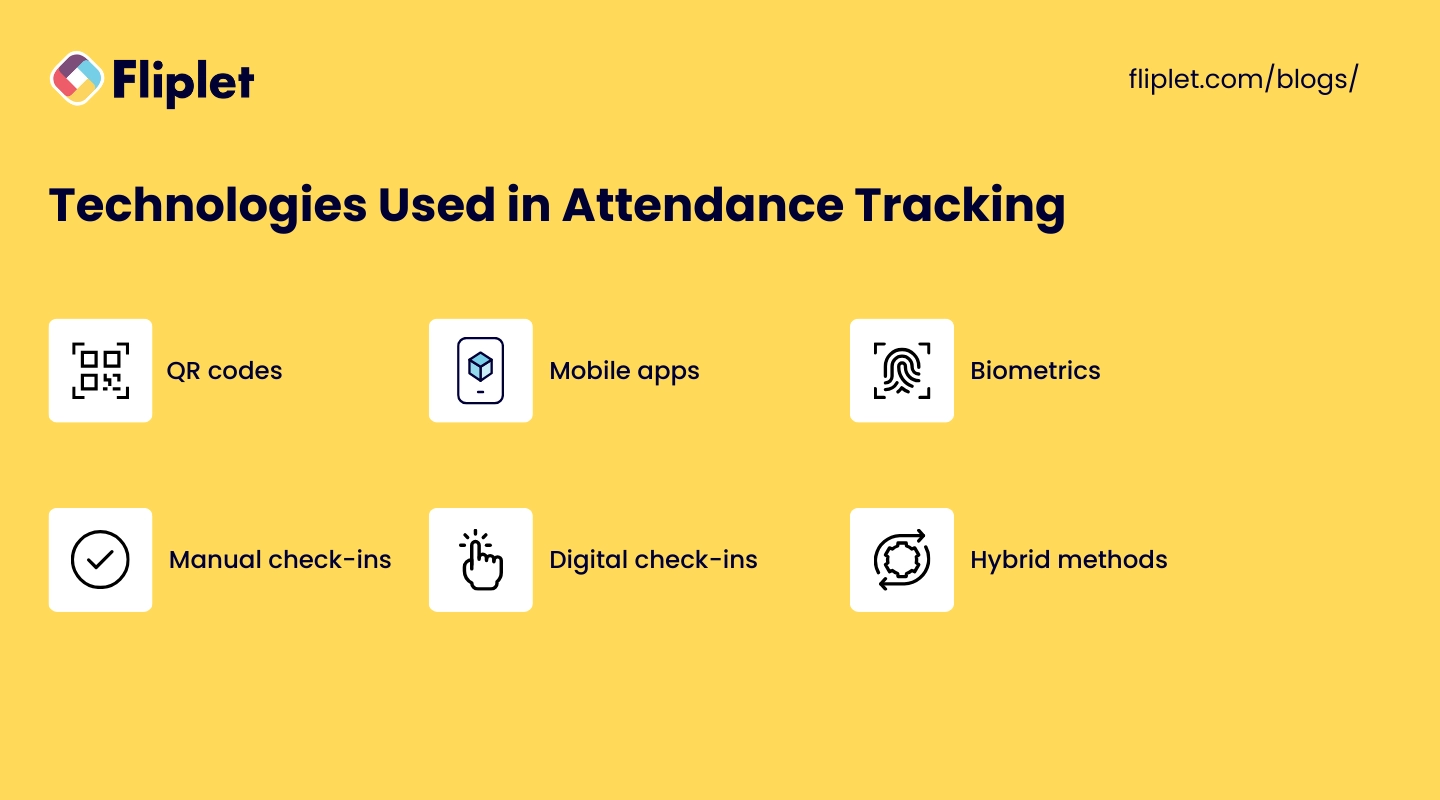
When it comes to event attendee tracking, you have many technological aids:
- QR codes — easy to generate and scan, cost-effective, integrates with event management systems
- Mobile apps — real-time tracking, interactive features, seamless check-in
- Biometrics — high security, reduces fraud
- Manual check-ins — simple, suitable for smaller events
- Digital check-ins — quick processing, reduces wait times
- Hybrid methods — combines technologies for flexibility
Types of Event Attendance Tracking
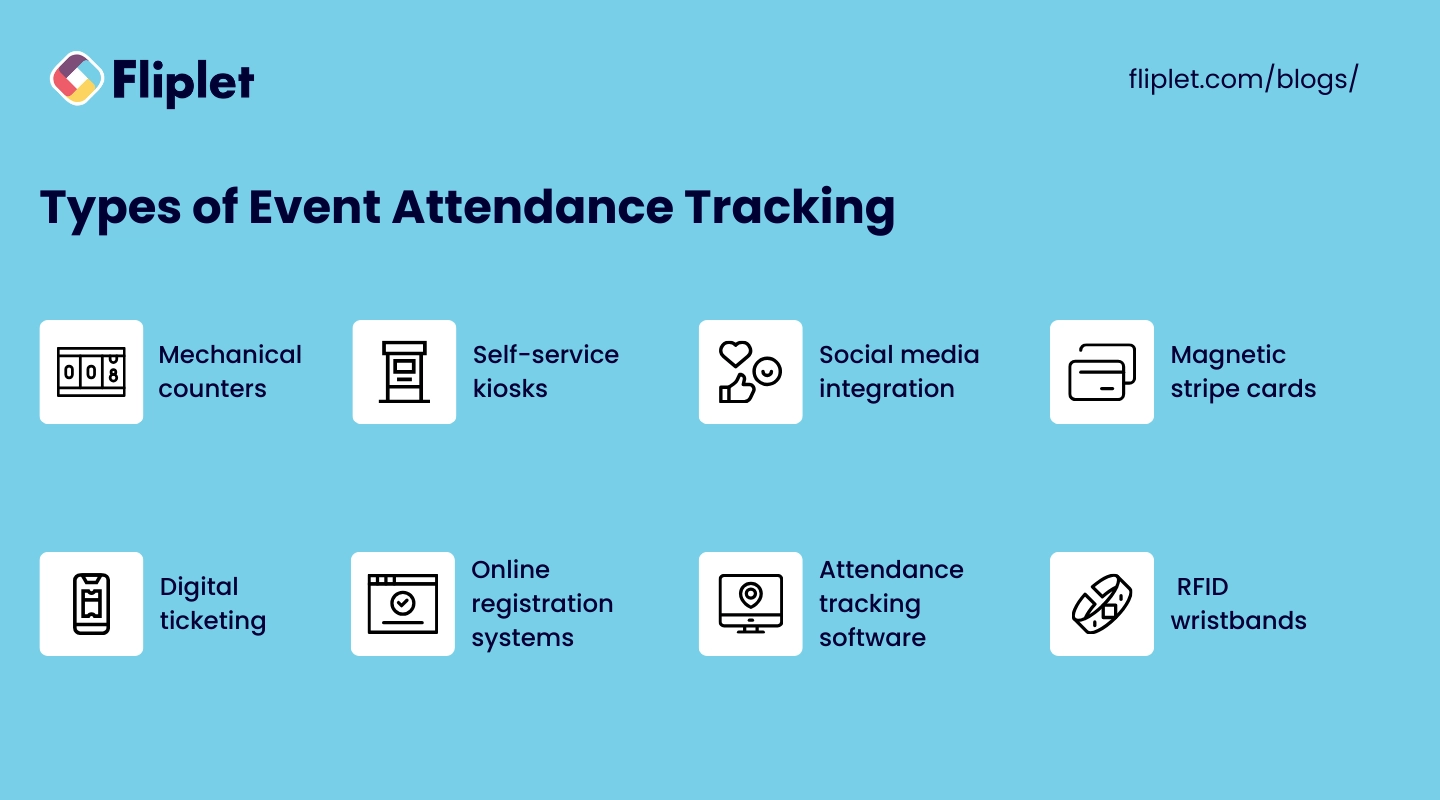
Choosing the right method depends on event size, nature, and needs. A corporate event app might be perfect for a large expo. Options include:
- Event Apps — comprehensive support
- Mechanical counters — simple, low-cost
- Self-service kiosks — fast, reduces staffing
- Social media integration — enhances engagement
- Digital ticketing — convenient, eco-friendly
- Online registration systems — streamlines pre-event planning
- Attendance tracking software — comprehensive data, real-time insights
- RFID wristbands — fast, secure
- Facial recognition — high security, quick processing
Tracking Attendance for Virtual Events

Tracking attendance for virtual events presents unique challenges and opportunities. QR Codes and Barcodes offer a simple yet powerful solution for integrating with virtual platforms. They are easy for attendees to scan and check in. Using an event app builder, you can build QR codes and barcodes into the flow, making them extremely easy for attendees to use. This method simplifies check-in and provides accurate data for virtual engagement.
Low-Tech Methods of Attendance Tracking

A great event attendance tracker doesn't have to come in the form of an app or a code.
- Spreadsheets (Excel) — simple and accessible, suitable for small events; manual data entry can be time-consuming
- Manual Check-Ins — personal interaction with attendees, no technology needed; less efficient for larger events
Challenges in Attendance Tracking
Organizers must manage:
- Privacy concerns — safeguarding attendee data, compliance with data protection
- Ensuring accuracy — avoiding manual errors and technical glitches
- Managing costs — balancing technology investments with budget
- Handling technical issues — reliable tech support, contingency plans
- Integrating with existing systems — compatibility, smooth data transfer
- Real-time data processing — quick updates, handling large volumes
- Ensuring user adoption — encouraging attendees to use new technologies
- Data security risks — encryption, monitoring
- Compliance with regulations — legal requirements
- Analyzing large datasets — advanced tools for insights
- Addressing attendee resistance — communicating benefits
- Maintaining system scalability — varying event sizes
How an Event Attendee Tracking App Can Help Overcome Those Obstacles
Using an event attendee tracking app can significantly mitigate these challenges: robust security features and compliance tools, automated systems for accuracy, cost-effective solutions, reliable tech support, seamless integration, real-time updates, user-friendly interfaces, advanced analytics, and scalable solutions. Ready to take your event management to the next level? Book a demo of Fliplet to see how our innovative solutions can help you plan and execute outstanding events.
How to Choose an Event Attendance Tracking App
Consider: Attendee experience — smooth check-in, easy navigation, real-time updates. Organizational insights — demographics, engagement levels, session popularity. Key features — real-time tracking and reporting, integration with existing event management tools, user-friendly interface for attendees and organizers. Evaluate multiple options, test trial versions, and consider future needs.
Conclusion
Effective attendee tracking is essential for maximizing event success. By choosing the right methods and technologies, you can enhance planning, improve attendee experiences, and gain valuable insights. Use this guide to navigate the complex landscape of event attendance tracking and make informed decisions for your next event. Need an event app builder to make attendee tracking easy? Book a demo to see how Fliplet can help you easily build apps for all your needs.
Lisa Broom is the Content Writer and Head of Marketing at Fliplet - an app building platform that enables anyone to easily create engaging and interactive mobile and web apps.
Frequently Asked Questions
What is attendee tracking, and why is it important?
Attendee tracking involves monitoring who attends an event and how they engage with it. It helps organizers plan better, allocate resources efficiently, enhance attendee experiences, and gather valuable data for future events.
What are the benefits of using an event attendance tracker app?
An event attendance tracker app can streamline check-in processes, provide real-time data, enhance security, personalize attendee experiences, and offer detailed insights for post-event analysis and feedback.
What technologies are commonly used for attendance tracking?
Common technologies include QR codes, mobile apps, biometrics, manual check-ins, digital check-ins, hybrid methods, RFID wristbands, facial recognition, and spreadsheets.
How does tracking attendance improve event planning and organization?
Tracking attendance enables accurate forecasting, better logistics planning, and smooth check-in processes. It helps ensure that resources are allocated appropriately and that the event runs smoothly.
What are the challenges associated with attendee tracking?
Challenges include privacy concerns, ensuring data accuracy, managing costs, handling technical issues, integrating with existing systems, real-time data processing, ensuring user adoption, data security risks, compliance with regulations, and maintaining system scalability.